Start and end of session
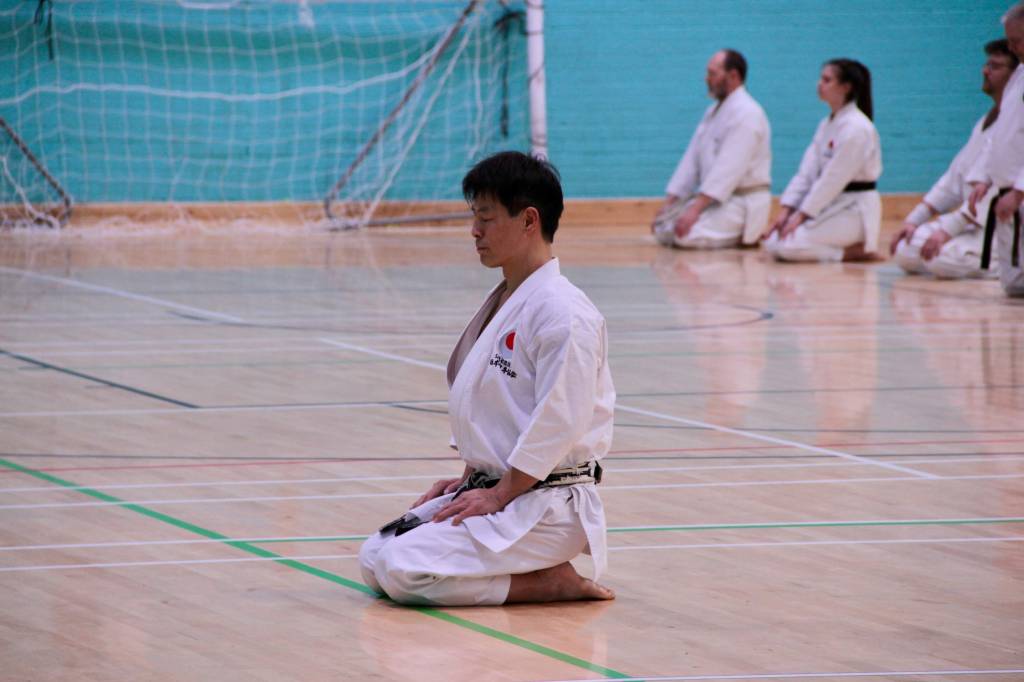
Instructor faces the front:
• 黙想 Mokusō (Close eyes / meditate)
• 開目 Kai-moku (Open eyes)
• 正面に礼 Shōmen ni rei (Bow to the front)
Instructor faces the class:
• 先生に礼 Sensei ni rei (Bow to the instructor)
• お互いに礼 Otagai ni rei (Bow to each other)
Instructor stands up:
• 起立 Kiritsu
道場訓 Dojo-kun

• Hitotsu, Jinkaku kansei ni tsutomuru koto (Seek perfection of character)
• Hitotsu, Makoto no michi wo mamoru koto (Be faithful)
• Hitotsu, Doryoku no seishin wo yashinau koto (Endeavor)
• Hitotsu, Reigi wo omonzuru koto (Respect others)
• Hitotsu, Kekki no yū wo imashimuru koto (Refrain from violent behaviour)
Dojo-kun explained
“Hitotsu” = “one”; “koto” = “do”
• Hitotsu, Jinkaku kansei ni tsutomuru koto: “Jinkaku” = “character”; “kansei” = “perfect”; “tsutomuru” = “make effort”
• Hitotsu, Makoto no michi wo mamoru koto: “Makoto” = “True/proper”; “michi” = “way”; “mamoru” = “protect/not veer off”
• Hitotsu, Doryoku no seishin wo yashinau koto: “Doryoku” = “effort/endeavour”; “seishin” = “spirit”; “yashinau” = “develop”
• Hitotsu, Reigi wo omonzuru koto: “Reigi” = “respect/manner”; “omonzuru” = “consider important”
• Hitotsu, Kekki no yū wo imashimuru koto: “Kekki” = “violence”; “yu” = “feeling”; “imashimuru” = “refrain”
 Cambridge Karate Dojo